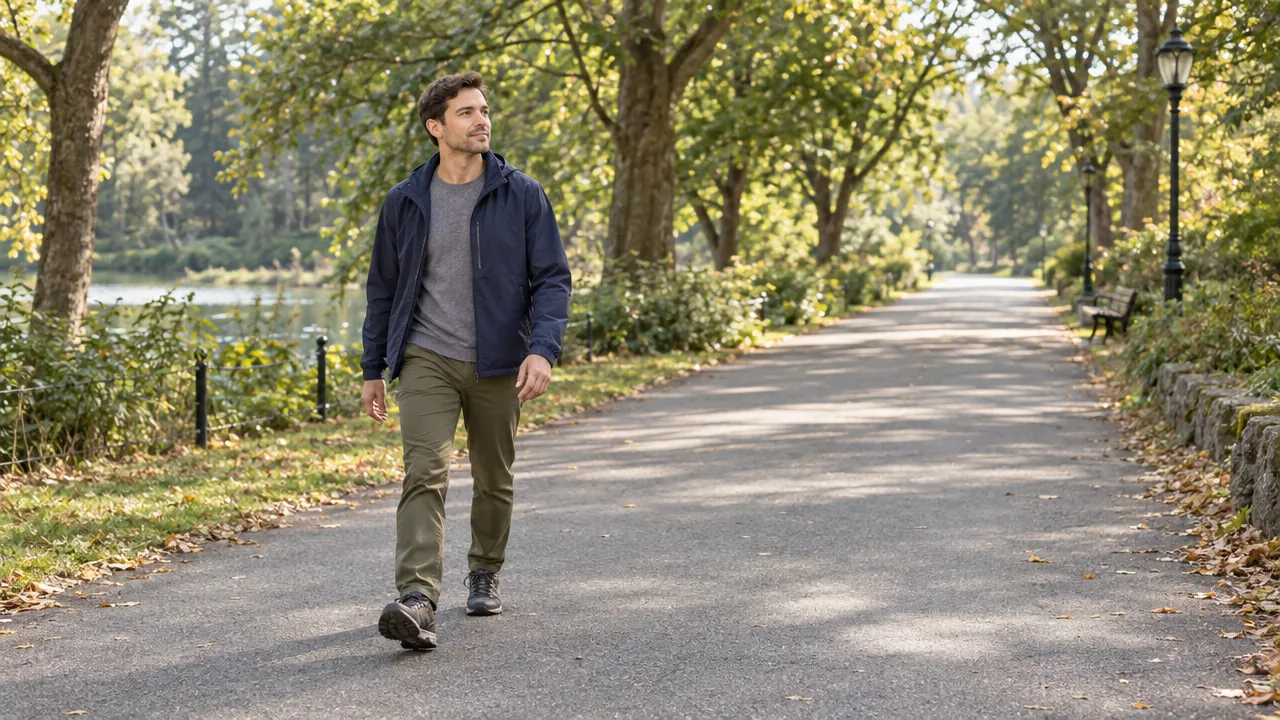
Before you begin, find a quiet space to walk. You could go outdoors, walk along a hallway or move back and forth across a large room. Walking meditation can be a formal practice, like paying attention to your breath. It can also be informal: you can bring awareness to an everyday walk from one place to another.
This practice offers a chance to gather your attention when your mind becomes distracted or caught up in its own thoughts. You might try it while moving between floors of a building, walking along a city street or passing through woods. Instead of travelling on autopilot, you pay attention to the experience of walking while remaining aware of what is around you. That awareness matters for safety. On a walk, hike, run or during another physical activity, it is easy to mentally check out without noticing; walking meditation offers another way to move.
How to practise walking meditation
The following guided practice is described as a 13-minute walking meditation for daily life. It begins with your steps, then invites you to notice sounds, smells and sights before returning to the physical feeling of walking. Throughout, stay aware of your surroundings as well as where you place your attention.
A guided practice in nine steps
1. Start walking at your natural pace. Put your hands wherever they feel comfortable: on your belly, behind your back or at your sides. If it is helpful, count your steps up to ten, then start again at one. In a small space, pause when you reach ten and deliberately choose a moment to turn around.
2. With each step, notice your foot lifting and falling. Feel the movement in your legs and the rest of your body. Pay attention, too, to any shift from side to side as you move. Let these ordinary sensations be the focus for now.
3. When something else captures your attention, return to the sensation of walking. Your mind will wander; guide it back without frustration, however many times that takes. Particularly outdoors, keep a broader awareness of your surroundings. Take in what is around you so you can stay safe, rather than becoming absorbed only in your steps.
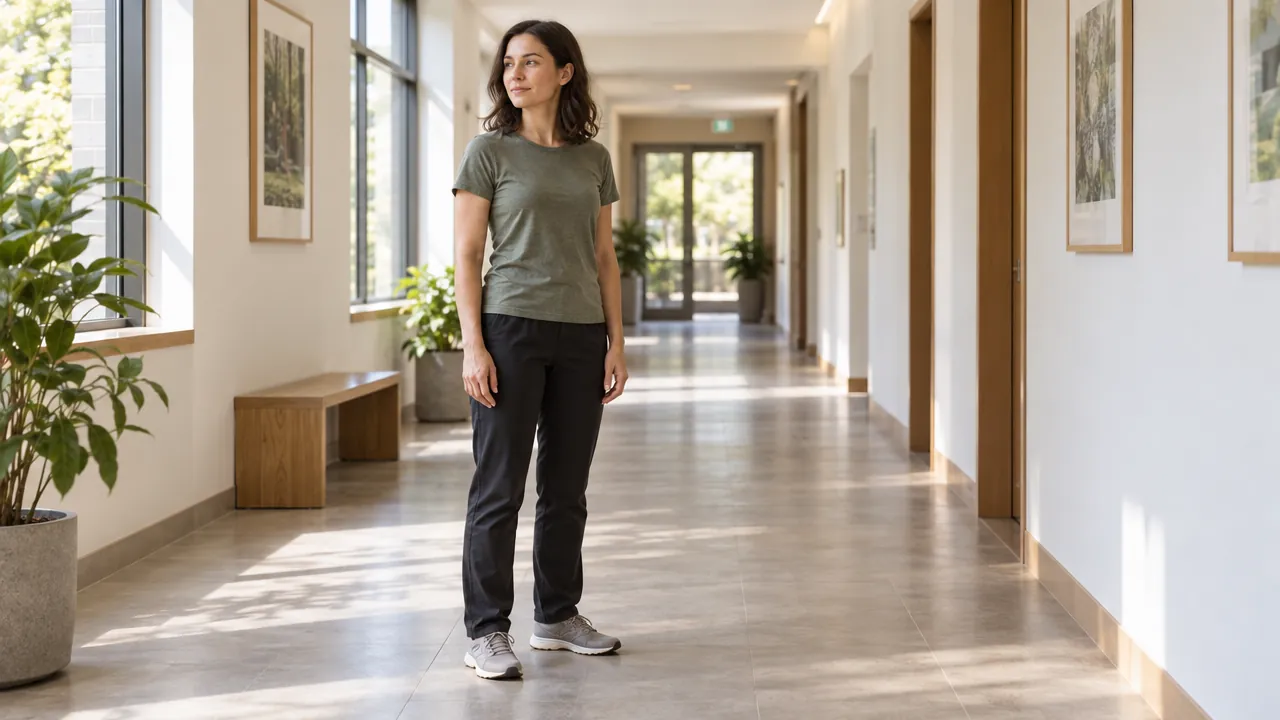
4. For a few minutes, widen your attention to sounds. Whether you are indoors, in woods or in a city, notice what you hear without naming each sound or getting caught up in it. There is no need to decide whether a sound is pleasant or unpleasant. Notice it simply as sound while you continue walking.
5. Shift your awareness to your sense of smell. Notice whatever you discover, without pushing yourself to detect something or forcing a particular feeling. Simply bring your attention to smelling for a while, just as you brought it to walking and listening.
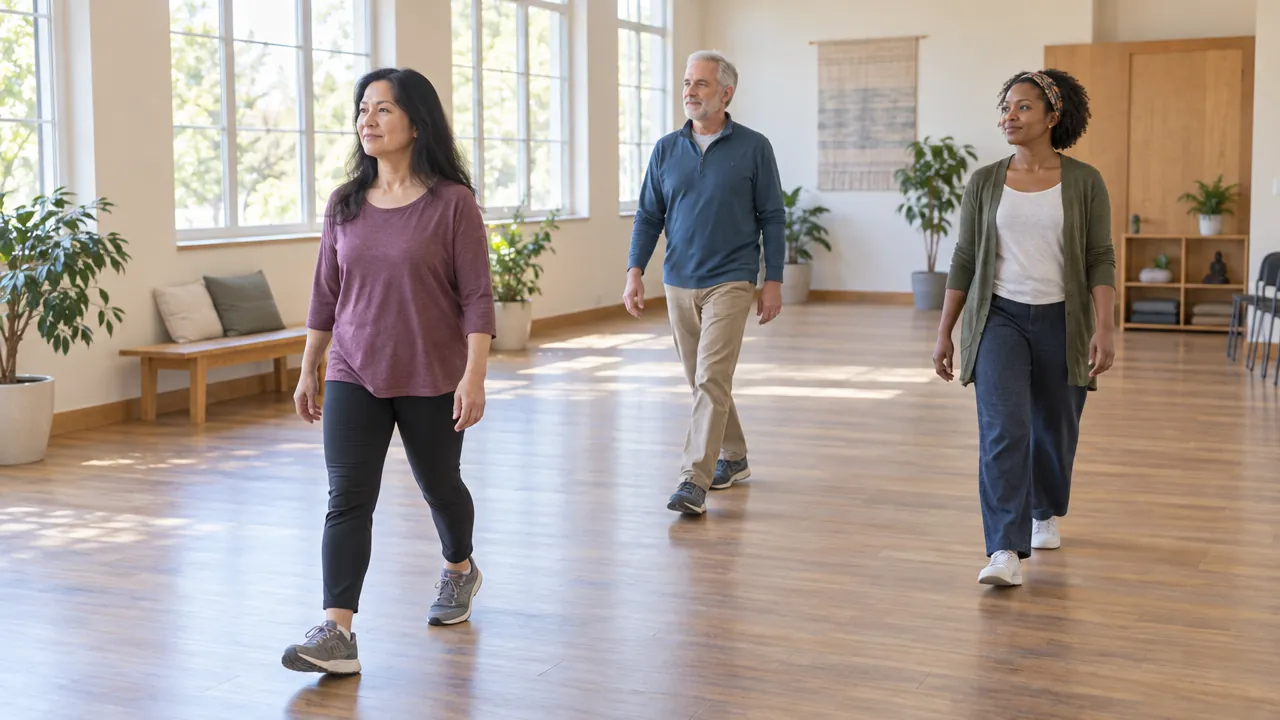
6. Turn your attention to what you see: colours, objects and anything else in view. If something draws your attention away, patiently return to awareness. If something needs addressing, such as an obstacle you must avoid, respond to it. Keep your attention natural rather than rigid: neither drifting into daydreams nor straining to concentrate.
7. Keep an open awareness of everything around you, wherever you are walking. At this point, there is nothing to do, fix or change. Continue walking while remaining fully aware of your surroundings and your movement. Let the practice be as straightforward as noticing that you are here and walking.
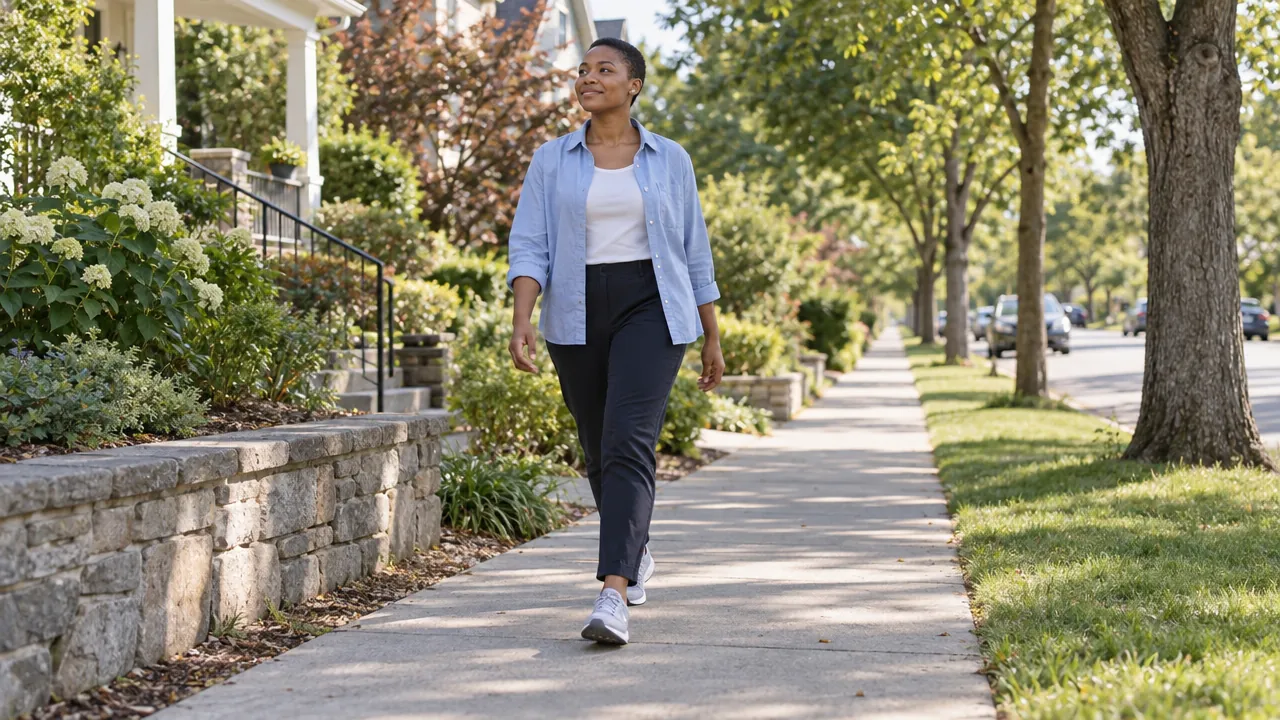
8. In the last moments, return to the physical sensations of walking, wherever your mind has gone during the practice. Notice your feet touching the ground again, and feel the movements in your body with each step. If your attention has wandered, simply come back to these sensations now.
9. When you are ready to finish, stand still for a moment. Pause and choose when to end the practice, rather than stopping without noticing. As you finish, consider how you might bring this kind of awareness into the rest of your day, including walks you take to get from one place to another.